
Why Begin Early?
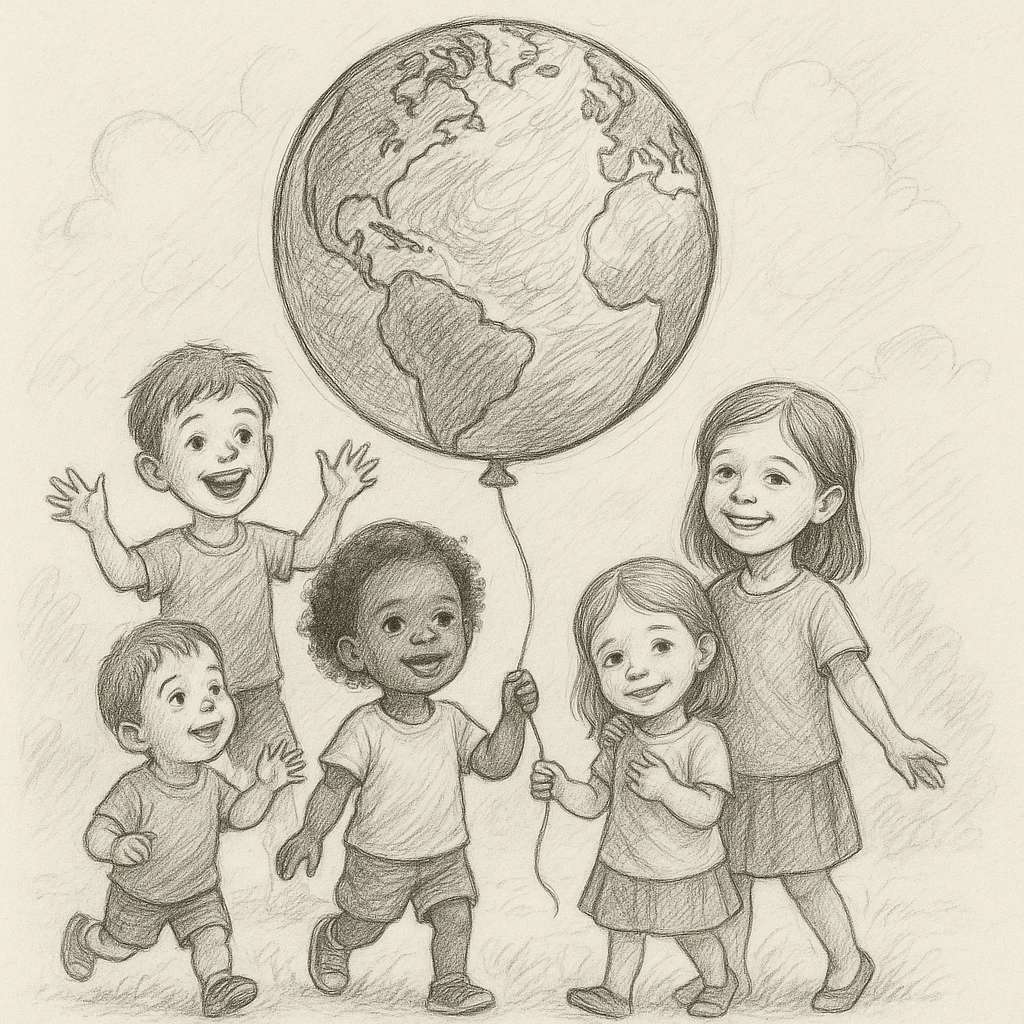
When we think about improving society, we often face the challenge of changing ingrained habits in adults. But there is a more effective and future-focused path: concentrating on children. By teaching youngsters from a young age about respect for others, collaboration and team-spirit, we help them grow up with these values already embedded in their character. It is far more difficult to instil such values in an adult who is set in their ways than to nurture them in a child who is still forming their worldview.
Solid Evidence for Value-Based Education
Recent research supports this focus. A study of 952 primary-school children found systematic relationships between children’s personal values and teacher-rated behaviours (such as being supportive, disciplined or learning-oriented).
Another review highlights how value-education underpins not just character but also contributes to a more harmonious society and helps us confront major social issues.
Moreover, early years education is shown to benefit long-term academic achievement, health and wellbeing — a vital foundation for positive adult behaviour too.
These findings indicate that educating children in values is more than a moral aspiration—it is backed by evidence that those values translate into behaviours that benefit individuals and society.
Real-World Example: A Values-Based Education Programme
At one early-childhood centre, educators began with the belief that children are capable citizens rather than empty vessels. They encouraged cooperative tasks, helped children mediate conflicts and even helped them lead a project in which they wove crafts and sold them to raise funds for a local shelter. The children not only developed practical skills, but also felt a sense of ownership, community responsibility and pride in what they achieved.
This anecdote illustrates how teaching values from a young age can produce tangible outcomes in children’s attitudes and behaviours — and thus contribute to a stronger society.
What Can Parents, Educators and Communities Do?
Embed the values: Respect, teamwork and caring for others should be discussed, modelled and reinforced consistently in homes, schools and community settings.
Provide the environment: Young children need safe, supportive environments where mistakes are tolerated, collaboration is encouraged, and reflection is part of everyday practice.
Support programme adoption: Schools can look into frameworks such as the “Values-based Education” approach, which emphasises positive values modelled by staff and fosters social skills alongside academic learning.
Monitor progress: Use simple indicators (behavioural changes, peer collaboration, community-oriented projects) alongside academic metrics, because value-based education often delivers across domains.
Call to Action
If we truly want to build a better society, the time to act is now. Support educational initiatives that focus on children’s value-formation. Whether you are a parent, teacher, community leader or policymaker, you can play a role: volunteer in value-driven programmes, donate to organisations that promote values-based learning, or advocate for curricula that integrate social-emotional learning and respect for others.
Let’s invest in the children of today so they become the responsible, collaborative adults of tomorrow.
Further Resources for Parents and Educators
Values-based Education – What is it and how it works — a practical introduction for schools and parents.
Scholz-Kuhn R., Makarova E., Bardi A., Döring A.K. (2023) The Relationship between Young Children’s Personal Values and their Teacher-rated Behaviours in the Classroom, Frontiers in Education — offers evidence of values → behaviour link in children.
UK Government (2024) Strong Foundations in the First Years of School — emphasises the importance of early quality education for success later in life.
 MS Torrisi Publishing
Leave a comment